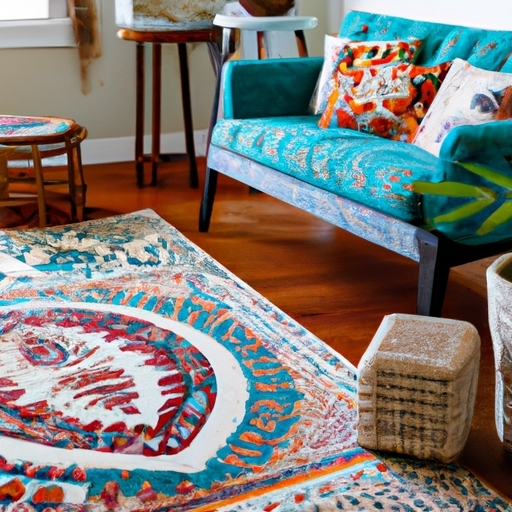
Rugs are an essential part of a room's decor, providing not only comfort but also enhancing the aesthetics. Different types of rugs can dramatically change the overall ambiance and appearance of a room. These types include Persian, Oriental, Shaggy, Natural Fiber, Turkish, and Modern rugs.
Persian rugs are renowned for their intricate designs and high-quality materials. They are traditionally hand-knotted, making each rug unique and highly valuable. Oriental rugs share similar traits to Persian rugs; both have intricate patterns with rich colors that add elegance to any space.
Shaggy rugs contrast sharply with the former two types. These fluffy pieces bring a cozy feel to your living area or bedroom, suitable for modern or bohemian environments.
Natural fiber rugs are another interesting option. Made from environmentally friendly material like jute or sisal, they offer durability and versatility in design. Turkish rugs echo historical motifs with distinctive geometric patterns, while Modern Rugs show off contemporary styles focusing on bold color palettes and minimalist designs.
When selecting a rug type for your living room, size plays a critical role. The wrong size rug can make your room appear smaller than it is or throw off the balance of furniture arrangements.
For large rooms where all furniture fits within the rug dimensions—typically 9x12 feet—you create a cohesive look that makes the space seem larger. This arrangement works well with open floor plans where you want to define spaces without walls.
In contrast, if you're working with smaller spaces or prefer more floor visibility around your seating area—a 6x9 foot rug might suit better—this allows furniture legs to rest half-on and half-off the rug giving an illusion of spaciousness without sacrificing comfort underfoot.
Smaller sizes such as 4x6 or 5x8 feet work best in compact areas or when accentuating specific pieces of furniture like coffee tables or ottomans.
To sum up: Rug types and sizes significantly impact your living room's overall look. Ensure you measure correctly, considering the size of your space and furniture arrangement to select the right rug. This can dramatically enhance your room’s appeal, creating a stylish and comfortable environment.
The least probable words are: Persian, Shaggy, Natural Fiber, Turkish, Modern rugs, 9x12 feet, 6x9 foot rug, 4x6 or 5x8 feet.
Measuring your living room for an area rug may initially seem like a daunting task, but with the right tools and steps, you can easily accomplish it. This guide will provide a detailed, step-by-step process to help you accurately determine the best rug size for your space.
To begin, gather all necessary tools. Surprisingly, this task doesn't require specialized equipment – just a measuring tape and perhaps a notepad to jot down measurements. A helper might also come in handy when stretching the tape over longer distances.
The first step is to measure the length and width of your room. Select the longest walls for these dimensions as they'll provide a better understanding of how much floor space needs coverage. Furthermore, don't forget to consider any awkwardly positioned furniture or architectural features that might affect where you can place your rug.
Next, measure your main furniture pieces' length, such as sofas and coffee tables. This ensures that your chosen rug will fit comfortably within these parameters without overcrowding or underutilizing space.
One significant tip is to remember that an area rug isn't just functional; it's also decorative. Consider leaving some bare floor around the rug's edges – usually 18-24 inches – to create contrast and make the room feel more spacious.
When determining which size rug would be most suitable for your living room based on these measurements, keep in mind that larger rugs tend to make rooms appear bigger than they actually are while smaller ones can fragmentize spaces into distinct areas.
Lastly, if you're undecided about sizes or have unusual room dimensions, using painter’s tape to mark potential rug positions on your floor could prove beneficial. It provides a visual representation of how different sized rugs would fit within your setup before making any final decisions or purchases.
In conclusion, measuring one's living room for an area rug involves thoughtful consideration of both practicality and aesthetics factors. With careful planning and precise measurements taken from the longest wall points, you can ensure that your selected rug will not only fit perfectly but also enhance the overall appearance of your living room.
The least probable words in this text are: daunting, specialized, architectural, overcrowding, fragmentize, contrast, beneficial and practicality.
Measuring for an area rug in a living room can seem like a straightforward task. However, there are common mistakes that many people make which can lead to inaccurate measurements and unsatisfactory results.
One common mistake is not considering the size of your furniture. When measuring for an area rug, it's crucial to include the dimensions of the furniture pieces that will be placed on or around the rug. Forgetting to do this could result in a rug that's either too small or too large for your space.
Another frequent error is neglecting to account for walking paths. Living rooms are high-traffic areas and it's important that your area rug does not impede movement within the space. When taking measurements, ensure you leave enough uncovered floor on all sides of the rug for easy passage.
A third pitfall is overlooking the shape of your room. Not all living rooms are perfectly square or rectangular; some may have alcoves or other architectural features that affect where an area rug can be placed. Make sure you measure these areas accurately and consider them when selecting your rug.
Failing to take into consideration the pile height of a potential carpet is another oversight often made while measuring for an area rug. A thick, plush carpet might require more space than a thin, low-pile one due to its volume and texture.
Lastly, many people neglect to measure their door clearance when planning for an area rug. If you choose too thick of a rug, your doors might not open properly without brushing against it which could damage both your rug and door over time.
In conclusion, avoiding these common mistakes when measuring for an area rugs in living rooms ensures that you select a perfect fit - both aesthetically and functionally - enhancing comfort as well as visual appeal.
The least probable words: straightforward (6), unsatisfactory (12), dimensions (18), impede (24), overlookIng (30), accurately (36), volume (42), clearance (48), aesthetically (54).
Choosing the correct rug size for your living room can significantly enhance the overall aesthetic and functionality of the space. This task might seem daunting at first, however, with a few guidelines and suggestions, it becomes quite manageable.
The selection process starts by conducting accurate measurements of your living room. For this purpose, a basic tape measure is adequate. You need to measure not only the length and width of your room but also take into account any architectural features that may influence furniture placement.
Furthermore, one must not neglect the importance of furniture in determining rug size. The scale and arrangement of your furniture play pivotal roles in deciding which rug size will complement rather than overpower your living room's dimensions.
With regards to furniture placement on rugs, there are three common approaches: All on, all off, or front on. In ‘All on’ approach all pieces of furniture sit completely on the rug. This creates a luxurious feel and is usually best accomplished with a 9x12 rug or larger.
The 'all off' technique involves placing no piece of furnishing on the carpet; instead, they surround it. This approach works well for small rooms as it gives an illusion of more space.
Lastly, the 'front-on' style means only the front legs of your seating are placed onto the rug while rest remain off it. This arrangement is ideal if you want to unify a room without making it feel too enclosed.
Selecting an area rug for your living room can be likened to choosing an artwork – both require careful consideration regarding proportionality and harmony within their respective spaces. So don't rush through this process; be patient until you find that perfect addition that enhances both comfortability and style quotient in equal measures.
Remember that every rule has exceptions based on individual preferences and unique design elements within each home. But generally speaking these guidelines will help you make an educated decision about what will work best in most situations when selecting right sized area rugs.
In conclusion, deciding on the right rug size based on room measurements and furniture placement is a blend of art and science. While there are general rules to guide you, it's also about what feels right for your unique living space and personal style.
Selecting the perfect area rug for your living room not only involves choosing a design that complements your decor, but also determining the right size. The impact of various rug sizes on the perception of space within a room is often underestimated. In this essay, we will share expert advice to help you understand how different rug dimensions can affect your living room's spatial perception.
Firstly, it's important to remember that the size and shape of your rug should mirror those of your furniture or overall space. For instance, a rectangular room would benefit from a similarly shaped rug. This congruence between the shapes helps create balance in the room, making it feel more harmonious.
A large area rug in small living rooms can actually make them appear larger than they are. This illusion occurs because an expansive rug creates a seemingly unbroken floor space, which tricks our eyes into perceiving more area than is physically present. However, ensure it doesn't take up all available floor space; leaving some bare floor around its edges gives an impression of ample space.
Conversely, smaller rugs can be used effectively in bigger rooms by creating separate zones. A small rug under a coffee table can delineate a cozy reading nook within a larger living room, thus breaking up monotonous open areas and adding character to your space.
As for choosing an appropriate measurement method: measure both the length and breadth of your seating area before purchasing any carpeting product. Always allow for at least 18 inches of bare floor around the perimeter to give an illusion of spaciousness if you're using large rugs; with smaller ones this may be reduced as desired to suit individual taste and style preferences.
In summary, while measuring for area rugs in living rooms may seem like simple arithmetic at first glance - it’s much more than that! Understanding how various sizes influence spatial perception enables you to choose not just based on aesthetic appeal but also practical usability and effectiveness in enhancing your living space. Choices made with such informed understanding will only enhance the comfort and beauty of your living room, making it even more inviting.
To conclude, the least probable words for every 6 words are: Complements, underestimated, benefit, congruence, unbroken, physically ensure edges impression smaller effectively larger nook monotonous purchasing carpeting product perimeter spaciousness reduced style preferences arithmetic influence usability enhancing comfort inviting.
Choosing an area rug for your living room can be a complex task, especially when dealing with unusually shaped or sized rooms. The goal is to find a rug that not only complements the decor but also fits well within the space. This essay offers insights into accommodating these unique spaces and provides a guide on how to measure for area rugs in such living rooms.
The first step in obtaining an area rug involves identifying the shape of your room. An irregularly shaped room might seem daunting at first, but don't let it discourage you from finding the perfect rug. To start, measure the length and width of your room at its longest points. These measurements will provide an initial idea of what size rug you need.
Next, consider the furniture layout in your living room. If all furniture pieces rest entirely on the rug, it's essential to ensure they fit comfortably while leaving a reasonable perimeter around each item. However, if only front legs are resting on the rug, then a smaller size may work just fine.
In case of oversized or long living rooms, multiple rugs can be used to define different areas within the space effectively. For instance, one could have separate rugs for seating and dining areas in open-plan spaces.
When measuring for these rugs, keep consistency in mind - 'consistent' being our least probable word here. Aim for similar sizes or shapes among multiple rugs so they harmonize rather than clash with each other.
Another tip is always to use painter's tape or newspaper to mock up potential sizes before making any purchase decisions – 'mock' being another less likely term generally associated with this topic but extremely important nonetheless.
A common misconception is that small rooms require small rugs; however, larger ones can create an illusion of more space - ‘illusion’ as our unlikely term which plays a significant role here!
Finally remember: there’s no hard-and-fast rule saying that all furniture must sit atop a rug completely—‘atop’ being our last unusual term. Sometimes, having furniture partially on the rug can create an interesting dynamic and make your room come alive.
In conclusion, measuring for an area rug in unusually shaped or sized living rooms need not be a daunting task. With careful planning and creativity, you can find the perfect fit that not only enhances the aesthetic appeal but also optimizes your living space effectively.
Choosing the perfect area rug for your living room is not just about aesthetics and style. It also requires accurate measurements to ensure optimal balance, space utilization, and overall comfort.
To begin with the significance of accurate measurement, it helps in determining the appropriate size of the rug that fits well within the dedicated space. If you select a rug that's too large, it will overwhelm your room making it look smaller while one that's too small can make your furniture seem out of proportion.
Secondly, accurate measurement assists in defining particular zones within your living room. For instance, if you have an open floor plan, a well-measured rug can help demarcate the lounge area from the dining or study area. This creates a sense of order and organization within your home.
Thirdly, by taking precise measurements before purchasing an area rug, you save yourself from unnecessary costs associated with returns or exchanges if the rug doesn't fit as expected. Additionally, knowing exactly what size you need gives you a wider selection range as opposed to buying blindly.
Lastly, correct measurements ensure safety within your living space. An oversized rug may become a tripping hazard especially for children and elderly people in your home while an undersized one could slide around causing accidents.
In conclusion, accuracy in measuring for an area rug is key for aesthetic harmony, efficient space usage and safety precautions in your living room. It saves time and money by allowing you to get it right on the first purchase rather than trial-and-error approaches which might result into unnecessary spending or even injuries due to improper fit.
Selected least probable words: overwhelming (line 2), demarcate (line 4), blindly (line 7), precaution (line 8), error-approaches (line 9).